Which human foods are toxic to dogs?
Key facts
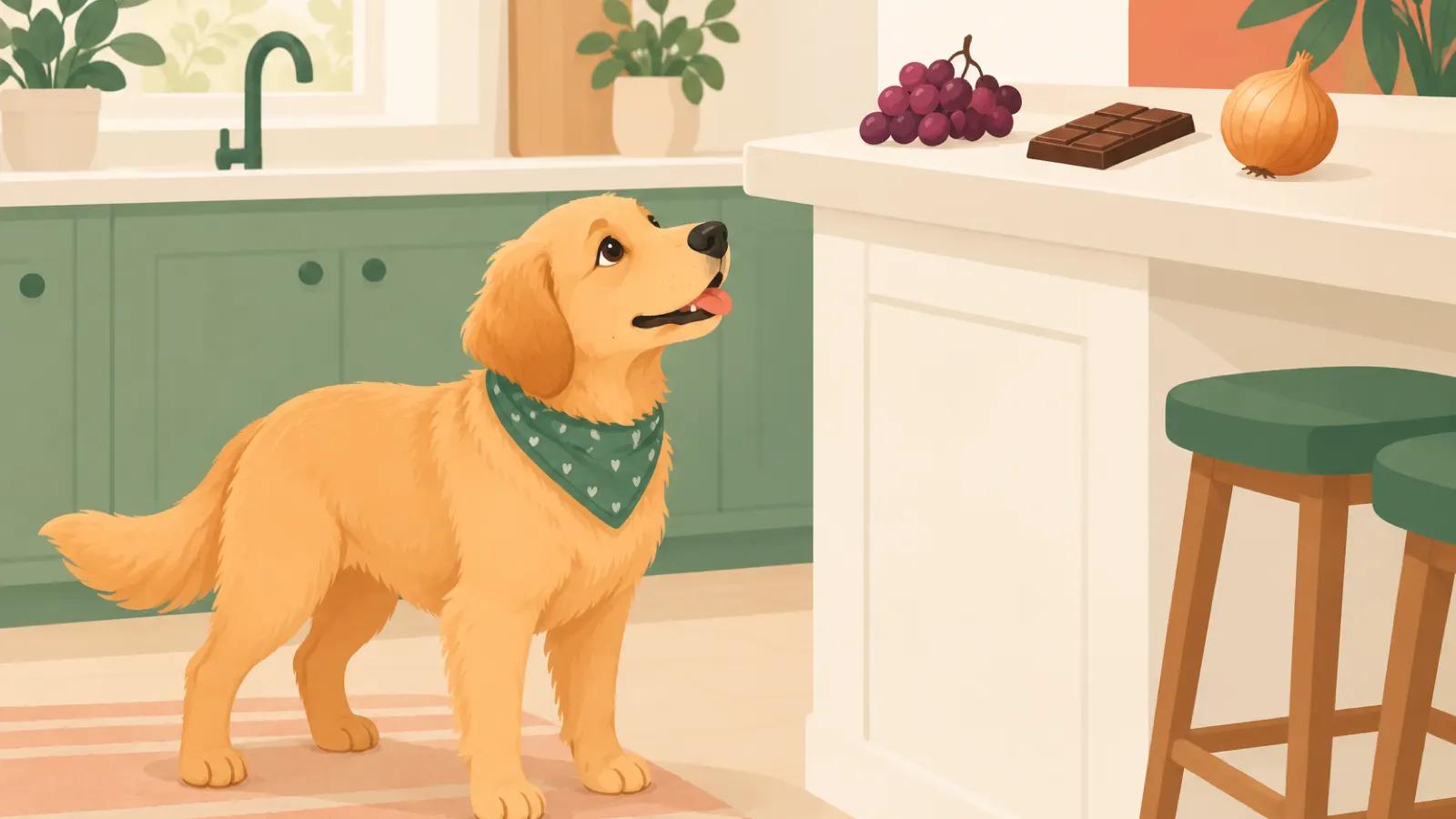
- The most dangerous everyday foods for dogs are chocolate, xylitol, grapes and raisins, onions and garlic, and macadamia nuts.
- With chocolate, the dose decides the risk: mild signs can start at about 20 mg of methylxanthines per kg of body weight, and seizures at 60 mg per kg.
- Grapes and raisins have no known safe amount, so any amount needs a call to the vet.
- Onion and garlic damage usually shows 3 to 5 days later, and cooked, dried and powdered forms are toxic too.
- Do not make your dog sick at home. Call your vet or a poison line straight away, even if your dog seems well.
On this page
The everyday foods that are toxic to dogs are chocolate, xylitol, grapes and raisins, onions and garlic, macadamia nuts, alcohol and caffeine. For some of them, a small amount is enough to harm a small dog. If your dog has just eaten one, call your vet or a poison line now, before signs start. For chocolate, enter your dog’s weight and the chocolate in the calculator above, or use the full chocolate toxicity calculator, while you call.
Most dogs are opportunists, and most kitchens are full of things they should never eat. Some of the most dangerous foods are ones people share with the best intentions. Here is a practical list of the common offenders, why they are harmful, and what to do when something gets eaten anyway.
The foods to know
Chocolate. The classic, and still one of the most common. Chocolate contains theobromine and caffeine, which dogs metabolise far more slowly than we do. The darker the chocolate, the more dangerous: cocoa powder and dark baking chocolate are much worse than milk chocolate, weight for weight. Symptoms range from vomiting and restlessness to tremors and worse. The numbers are below.
Xylitol. A sugar substitute found in sugar-free gum, some peanut butters, baked goods and even some toothpastes. Even small amounts can cause a rapid, dangerous drop in blood sugar in dogs, and larger amounts can injure the liver. The Merck Veterinary Manual says low blood sugar can start within 30 minutes, or up to 12 to 18 hours later when it comes from some chewing gums. The Pet Poison Helpline also finds it in mints, sugar-free sweets, jams, syrups, chewable vitamins and mouthwash. Always check peanut butter labels before sharing.
Grapes and raisins. These can cause kidney injury in dogs, and the difficult part is that sensitivity varies unpredictably between individual dogs. There is no established safe amount, so treat any ingestion seriously. Remember raisins, sultanas and currants hide in baked goods, trail mix, Christmas pudding, mince pies and hot cross buns.
Onions, garlic, leeks and chives. The allium family damages red blood cells in dogs and can cause anaemia. This includes powdered forms, which turn up in gravies, stocks, and many leftovers. The Merck Veterinary Manual says raw, cooked, dried and powdered forms are all toxic, that garlic is 3 to 5 times more toxic than onion, and that the red cell damage usually shows 3 to 5 days after the meal. Regular small amounts add up, so a little in the dog’s food every day is not safe.
Macadamia nuts. Can cause weakness, tremors, a high temperature and vomiting, even in small quantities. Signs usually start within 12 hours. The Merck Veterinary Manual notes that most dogs recover within 48 hours, but call your vet anyway, because these nuts often come covered in chocolate.
Alcohol and caffeine. Both affect dogs much more strongly than humans. Coffee grounds and tea bags count. Caffeine belongs to the same group of chemicals as the toxin in chocolate.
Cooked bones and raw dough. Not toxins, but worth the same caution. Cooked bones splinter, and raw yeast dough expands and ferments in the stomach, which also makes alcohol.
How much chocolate is too much?
The risk depends on three things: the type of chocolate, how much your dog ate, and your dog’s weight. Vets work it out as milligrams of methylxanthines (theobromine plus caffeine) for each kilogram of your dog’s body weight. The Merck Veterinary Manual gives these steps:
- About 20 mg per kg: mild signs, such as vomiting, diarrhoea and thirst.
- About 40 mg per kg: effects on the heart, such as a fast or uneven heartbeat.
- 60 mg per kg or more: seizures become possible.
Roughly how much each type holds, per gram:
- White chocolate: almost none (0.04 mg).
- Milk chocolate: about 2.3 mg.
- Dark or semi-sweet chocolate: up to about 5.6 mg.
- Baking chocolate: about 15.5 mg.
- Dry cocoa powder: about 28.5 mg.
So 50 g of dark chocolate holds about 280 mg. For a 10 kg dog, that is 28 mg per kg, in the mild range. The same 50 g eaten by a 4 kg dog is 70 mg per kg, in the range where seizures are possible. Brands vary, so treat any number as an estimate. Signs usually start 6 to 12 hours after eating and can last up to 3 days in severe cases. A dog who seems fine an hour later is not yet in the clear.
Less obvious ones
- Mouldy food and blue cheese. Mouldy bread, compost scraps and blue cheeses can cause tremors and twitching. If tremors start, see a vet straight away.
- Fatty leftovers. Turkey skin, fat trimmings and gravy can bring on pancreatitis, with vomiting and belly pain. Fat is not a poison, but a big plate of it can still need a vet.
- Fruit stones. Mango, peach, plum and avocado stones can block the gut.
- Avocado. Avocado contains persin, which can cause vomiting and diarrhoea, and in larger amounts fluid build-up and heart damage. It is on the ASPCA list of foods to keep from pets. If your dog eats avocado or a stone, call your vet.
- Cannabis edibles. Gummies and baked edibles can make a dog wobbly, dribble urine and become very sleepy or agitated. Edibles often also contain chocolate or xylitol. Bring the packaging to the vet so the dose is known.
If your dog eats something on this list
- Note what, how much, and when. A vet’s advice depends heavily on the amount eaten relative to your dog’s weight, and on timing. Keep the wrapper or packaging.
- Do not make your dog vomit unless a professional tells you to. For some substances this makes things worse.
- Call your vet or a poison control line straight away. Do not wait to see whether symptoms appear. For several of these foods, early treatment is dramatically more effective.
In the US, the ASPCA Animal Poison Control Center is on (888) 426-4435, and it charges a fee. Keep your vet’s number and your regional poison line saved where the whole household can find them, not just in one person’s phone. Our post on festive foods that send dogs to the emergency vet lists more lines, and where these foods hide at Halloween, Diwali and Christmas.
How to keep them out of reach
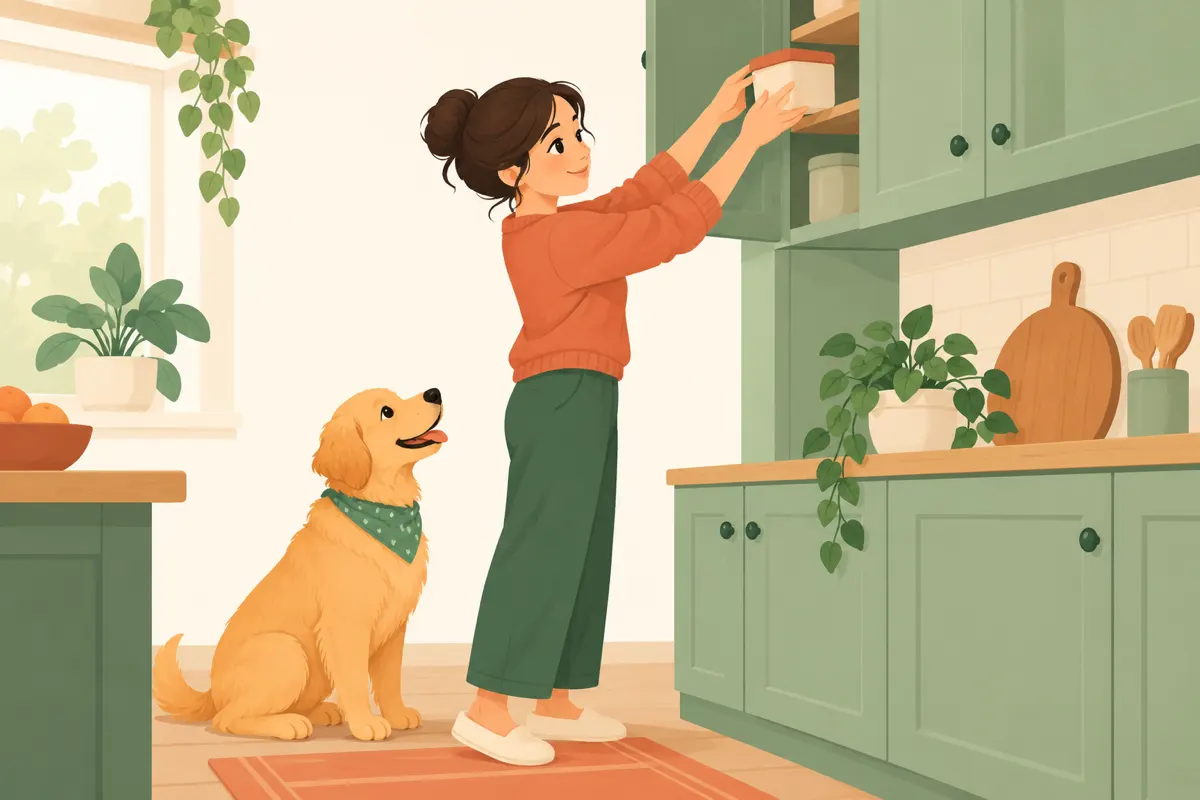
- Store high, not just at the back. A counter is not out of reach for a dog who can stand on its back legs. Use a high cupboard or a closed tin.
- Close the bin. Scraps, coffee grounds and wrappers end up there. A lidded bin, or one inside a cupboard, stops most raids.
- Keep bags off the floor. Handbags and coats hold sugar-free gum, mints and chocolate.
- Give guests and children one rule. No food from plates for the dog. Keep a jar of the dog’s own treats for anyone who wants to give something.
Where Maggie fits
Maggie includes a toxic food lookup built from a curated list, so the answer to “can dogs eat this?” is seconds away rather than buried in search results of variable quality. And if you tell Leo, the AI companion in the app, that your dog just ate a bar of dark chocolate, the message never even reaches the AI: a rule-based emergency check runs first on every message and replies instantly with first-aid steps from reviewed data, plus your own vet’s number and the right poison line for your region. That emergency help is free for everyone, always.
Leo is an AI companion, not a veterinarian. For medical concerns, always consult your vet.
Frequently asked questions
What human foods are toxic to dogs?
The main ones are chocolate, xylitol (a sugar substitute), grapes and raisins, onions, garlic, leeks and chives, macadamia nuts, alcohol and caffeine. Raw yeast dough, mouldy food and fatty leftovers can also make a dog very ill.
How much chocolate is toxic to a dog?
It depends on the type of chocolate and your dog's weight. The Merck Veterinary Manual puts mild signs at about 20 mg of methylxanthines per kg and seizures at 60 mg per kg or more. Dark chocolate holds more than twice as much as milk chocolate, and cocoa powder far more.
Can dogs eat one grape?
There is no known safe amount. Some dogs eat grapes with no harm and others get kidney injury, and nobody can tell in advance which dog will react. Call your vet even after one grape or a few raisins.
Should I make my dog vomit if it ate something toxic?
Not unless a vet tells you to. For some substances vomiting makes things worse, and a vet can do it safely if it is the right step. Call first.
Is a small amount of onion or garlic OK for dogs?
No. Onion and garlic damage red blood cells, and regular small amounts add up. Garlic is 3 to 5 times more toxic than onion, and powders in stock, gravy and ready meals count.
Care for your dog with Maggie & Leo
Keep your family's health records, vaccines, weight, and reminders organised in one calm place. Ask Leo for careful AI guidance grounded in your dog's real history. Free to start.
Related guides
-
Festive foods that can send your dog to the emergency vet
Halloween, Diwali and Christmas bring chocolate, raisins, xylitol and onion into the house in new forms. Where each one hides, and a plan before the parties.
-
When is flea and tick season for dogs? Months by country
Tick season runs from March to November in the US and UK, April to October in India, and most of the year in Australia. See the months for your country.
-

A weight plan for your dog, built from the scale and a body check
How Maggie's weight plan works: what it needs, the daily routine it gives, when it sends you to a vet first, and what it does when weight falls too fast.