How often should you flea your dog? It depends on the product
Key facts
- Most flea treatments for dogs protect for 1 month, so you give them every 4 weeks.
- Some chews protect for 12 weeks. A collar can protect for up to 8 months.
- Some flea treatments do not cover ticks. Check the label for both.
- Fleas breed indoors all year, so many vets advise treating all year, not only in summer.
- Count the next dose from the day you gave the last one, at the dose for your dog's weight today.
On this page
Most dog flea treatments protect for 1 month, so you give them every 4 weeks. Some chews last 12 weeks, and a collar can last up to 8 months. The right interval is the one on your product’s label, at the dose for your dog’s weight today. Many vets advise treating all year, because fleas breed indoors in heated homes in every season.
Use the calculator above to work out when your dog’s next dose is due, then read on for how each type works and why doses get missed.
How often, by type of treatment
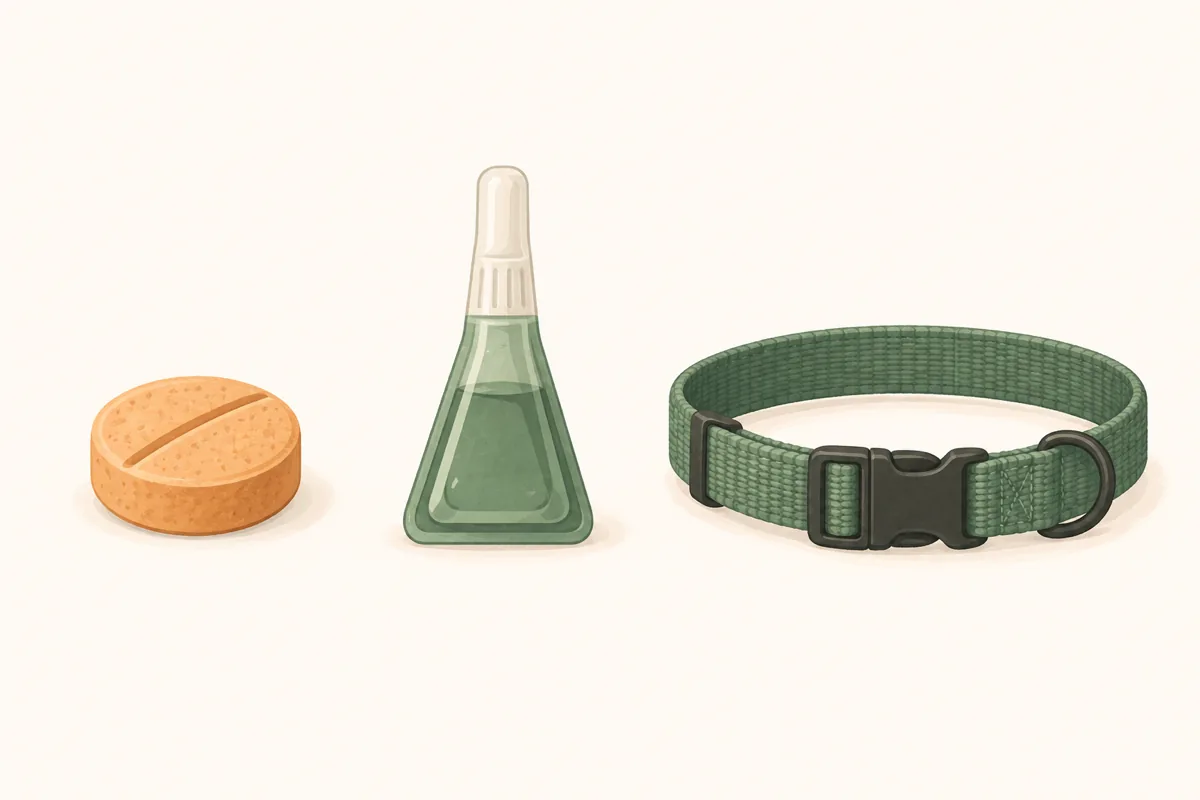
The table lists common dog treatments, with how long one dose protects against fleas and ticks according to the product label. The protection times come from the product data in Maggie, which is built from the official labels in the UK Product Information Database and the US DailyMed label library.
| Type | Examples | Fleas | Ticks | Give it |
|---|---|---|---|---|
| Monthly chew | NexGard, NexGard Spectra, Simparica, Simparica Trio, Credelio, Credelio Plus | 1 month | 1 month | Every 4 weeks |
| Monthly spot-on | Frontline Plus | 1 month | 1 month | Every 4 weeks |
| Monthly spot-on, fleas only | Advocate, Advantage, Revolution | 1 month | Not covered | Every 4 weeks, plus a tick product if your dog needs one |
| 12-week chew | Bravecto | 12 weeks | 12 weeks | Every 12 weeks |
| Collar | Seresto | Up to 8 months | Up to 8 months | Replace by the date on the pack |
In the US, Bravecto covers the lone star tick for 8 weeks, not 12, so the calculator above uses 8 weeks for ticks there. Some products also cover worms, lungworm or heartworm in the same dose.
Chews and tablets
A chew works from the inside: fleas and ticks that bite are killed. It does not wash off, so swimming and baths do not change the interval. Give it with food if the label says so, and watch that your dog swallows it.
Spot-ons
A spot-on goes on the skin at the back of the neck and spreads through the coat oils. Many labels ask you not to bathe your dog for about 2 days before and after. Frequent swimming or shampoo can shorten how well some spot-ons work, so check the label if your dog swims a lot.
Collars
A collar releases its active ingredient slowly over months. It only works when it sits snugly against the skin, and it needs replacing by the date on the pack, which is easy to forget because it is so far away.
Three rules that make any schedule work
- Count from the day you gave it, not from the start of the month. A monthly chew given on the 20th is due again on the 20th.
- Weigh your dog first. The dose band depends on weight. Puppies can move up a band between two doses.
- Check the minimum age and weight on the label before you treat a young puppy. Ask your vet which product fits.
Can you stop in winter?
Not in most homes. Fleas live and breed indoors, and central heating keeps them going all winter. The Companion Animal Parasite Council advises that all dogs are treated year-round.
Only about 5 percent of a flea problem is on the dog. The rest is eggs and pupae in carpets, bedding and sofa seams. Treating the dog alone can take 3 months to clear an infestation. Vacuuming daily and washing bedding at 60 °C cuts that down a lot.
Ticks are seasonal, but the season is long. In the UK, ticks are most active from March to November, and flea problems in the home peak from August to October. Our flea and tick season by month guide has a calendar for the UK, the US, Canada, India and Australia.
How to tell if your dog has fleas
- Scratching and nibbling, often at the base of the tail and the back legs.
- Flea dirt: comb your dog over white paper. Small dark specks that turn red-brown when you wet them are flea droppings.
- Live fleas: small, brown and fast, easiest to see on the belly where the fur is thin.
If you find fleas, treat every dog and cat in the home, then clean the home. Never use a dog product on a cat: some dog spot-ons contain permethrin, which is toxic to cats.
Why doses get missed
The products work. The calendar is where it goes wrong:
- Nobody owns the date. Two people each think the other gave the chew. A shared record fixes this.
- The interval is longer than memory. A 12-week chew or an 8-month collar is easy to forget because the date is so far away.
- The dose was given but not written down, so the next date is a guess.
- The product changed and the old rhythm stayed. A switch from a monthly chew to a 12-week chew needs the next date changed the same day.
Where Maggie fits
Maggie records each treatment as a dated dose and works out cover from what you actually gave, so “covered until 12 November” is counted from the day you treated. A combination product is credited for everything it covers in one entry. Reminders arrive before the next dose, follow your time zone when you travel, and go to everyone in the household, so “I thought you did it” stops happening.
For the right product and interval for your dog, ask your vet.
Leo is an AI companion, not a veterinarian. For medical concerns, always consult your vet.
Frequently asked questions
How often should you flea your dog?
It depends on the product. Most chews and spot-ons protect for 1 month, so you give them every 4 weeks. Some chews protect for 12 weeks, and a collar can protect for up to 8 months. Follow the interval on your product's label.
Can I flea my dog every 2 weeks?
Not unless your vet tells you to. Giving a product more often than its label says can overdose your dog. If fleas are still there after a treatment, the cause is usually eggs and pupae in the home, not a weak product. Talk to your vet.
Do dogs need flea treatment in winter?
Usually yes. Fleas live and breed indoors, and central heating keeps them going all winter. The Companion Animal Parasite Council advises treating dogs all year. Decide any break with your vet, not by forgetting a dose.
Does flea treatment also stop ticks?
Not always. Many chews cover both fleas and ticks, but some spot-ons cover fleas only. Check the label for ticks before walks in long grass or woodland.
Should I treat my other pets too?
Yes. Treat every dog and cat in the home at the same time, or fleas move to the untreated pet. Never use a dog product on a cat: some dog spot-ons contain permethrin, which is toxic to cats.
Care for your dog with Maggie & Leo
Keep your family's health records, vaccines, weight, and reminders organised in one calm place. Ask Leo for careful AI guidance grounded in your dog's real history. Free to start.
Related guides
-

When is flea and tick season for dogs? Months by country
Tick season runs from March to November in the US and UK, April to October in India, and most of the year in Australia. See the months for your country.
-

Autumn tick season: why the risk doesn't end with summer
Tick season does not end in September. In the US and the UK ticks stay active into November. Why autumn is a peak, and how to keep your dog protected.
-

Lyme season in the Northeast: what tick months mean for your dog
When is Lyme season for dogs in the US Northeast? Tick risk peaks from April to June and again from September to November. Prevention, vaccine and signs.